Polski


 System montażu naziemnego
 system mocowania na dachu
 System mocowania wiaty garażowej
 system mocowania farmy
 Easy Solar Kit
 system śledzenia słonecznego
 Falownik słoneczny
 Akcesoria słoneczne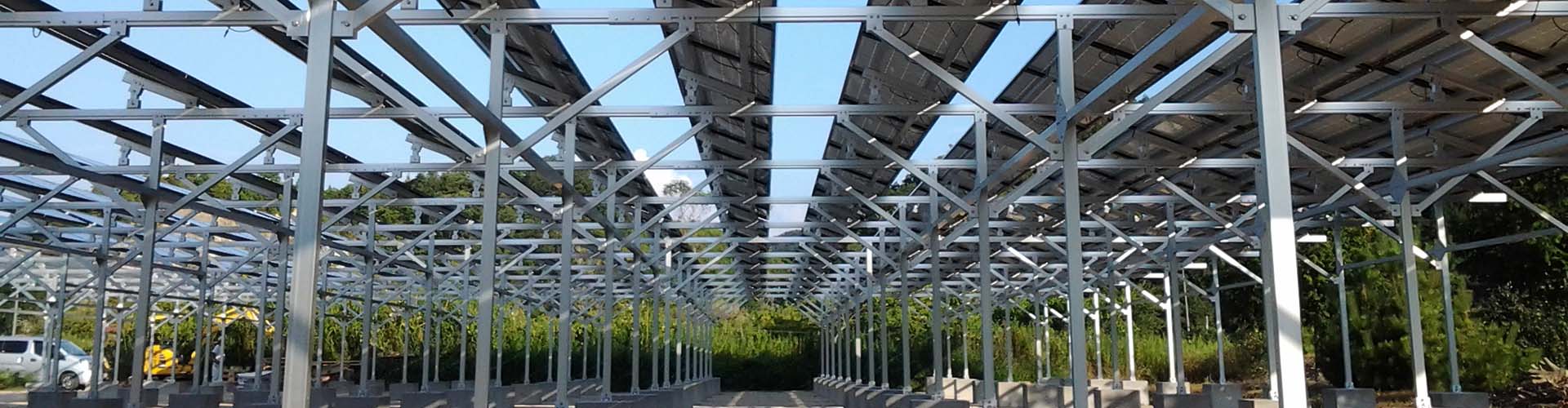
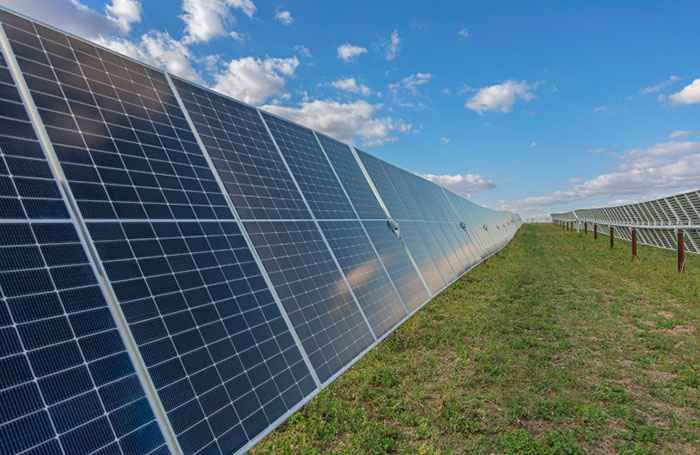
The Illinois solar project employs terrain trackers and installation robots to reduce engineering workload.
Burns & McDonnell's scope of work included EPC services. AZCO, as Burns & McDonnell's construction subsidiary, was responsible for the self-construction of the underground electrical systems, pile driving, and the installation of trackers and modules. The project team also provided environmental support, built a 34.5/138 kV collector substation housing two substations, and constructed a power transmission line connecting to the new location of the existing Gibson City Energy Center substation. The project was completed by union labor under a national maintenance agreement.
Burns and McDonald's collaborated with Nextpower to provide terrain trackers, Shoals to provide ground collection systems, and SMA to provide inverters for the project. Earthrise has purchased Runergy solar panels, high-voltage circuit breakers, and transformers.
This project aims to serve multiple power purchase agreements. To support this coordinated operation, Burns and McDonald designed and debugged the monitoring and data acquisition (SCADA) system for the project, providing necessary control functions for the safe management of power generation resources.
The Gibson construction site has also become a testing ground for the next generation of building automation technology. Burns and McDonald deployed Gret's AI software and robots, and installed some solar panels on site. Grit combines AI with robotics technology to automate labor-intensive building activities by creating intelligent systems that can be attached to standard building equipment. In Gibson City, Gret machines are responsible for lifting and placing solar panels, reducing the need for repetitive heavy physical labor while improving safety and productivity.
The project also demonstrates how engineering and technology can significantly reduce the impact of construction on the environment. By adopting Nextpower terrain tracker technology, the design follows the natural contours of the site, limiting the leveling work volume within the entire project area to no more than 40000 cubic yards. Compared to traditional utility scale solar construction, this method reduces the need for leveling operations by up to 90%, helping to protect existing landscapes, minimize erosion risks, and reduce the need for replanting. Burns&McDonnell also collaborated with the owner to develop a local seed mixture and started growing it before it was mobilized to the site, thereby enhancing the ornamental value of the final project.
Zapytania dotyczące naszych produktów lub cennika prosimy kierować do nas, a skontaktujemy się z nami w ciągu 24 godzin.
 RM502, Sihai Smart Zone, No.189, Fanghu West Road, Huli District, Xiamen, Fujian, China.



© prawa autorskie: 2026 Xiamen Wintop New Energy Tech Co., Ltd.. Wszelkie prawa zastrzeżone.

Obsługiwana sieć IPv6